3 Months of Recording Meetings as an Entrepreneur: What I Learned
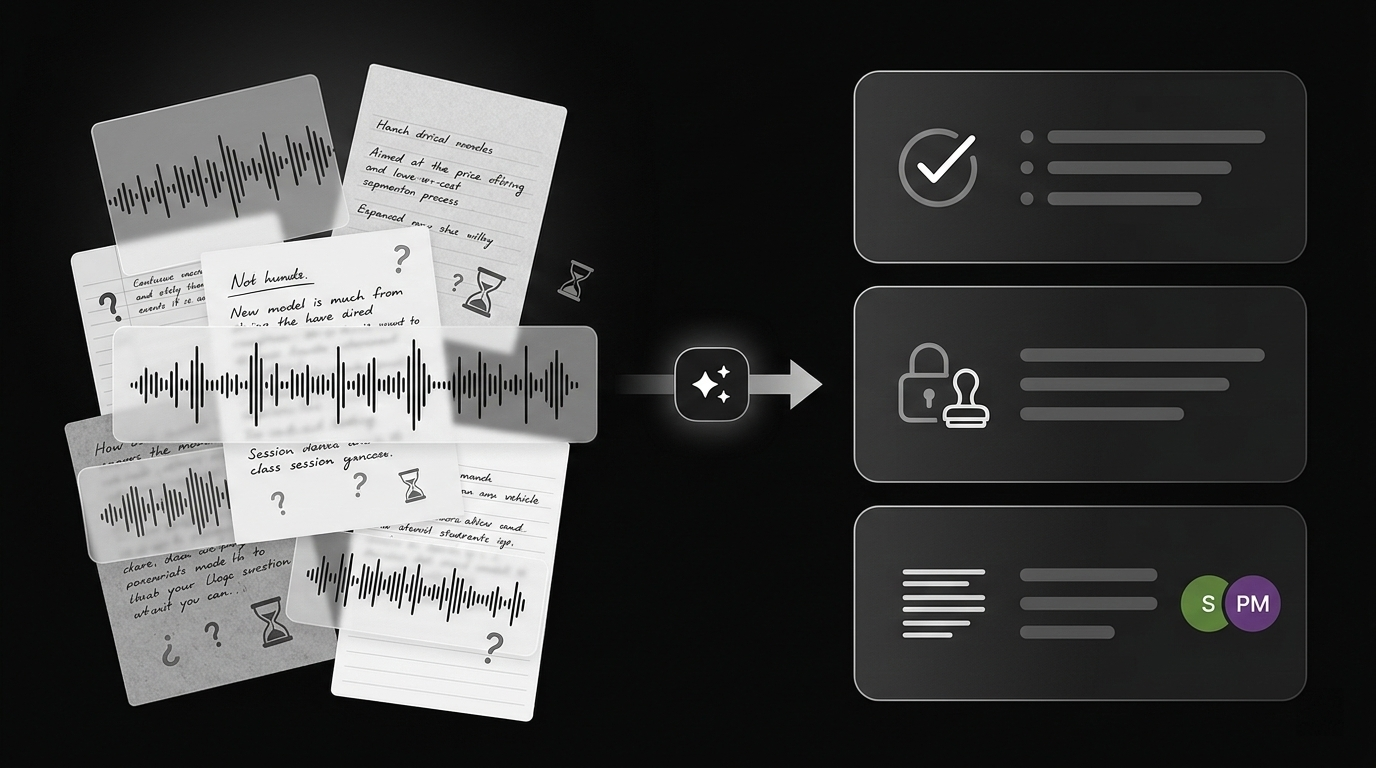
While building Brief, I realized that the problem the product solves was exactly what I was experiencing.
Before I started developing Brief, I was having an average of 8-10 meetings every week. Some were short, some were hours-long technical discussions. They all had one thing in common: everything was clear when the meeting ended, but 48 hours later, that clarity had evaporated.
Sentences starting with "I was going to do this" turned into arguments about who was going to do what and when. We had made a decision, but everyone had a different version of exactly what that decision was. Did I take notes? Sometimes. But did I ever look at those notes again? Rarely.
I wasn't the only one experiencing this.
Numbers Don't Lie
To better understand this problem while developing Brief, I systematically recorded and analyzed my own meetings for 3 months. What I found was thought-provoking:
An average of 4.2 action items came out of each meeting. Only 40% of these were completed by the next meeting. The rest were either forgotten, postponed, or got caught in the "we didn't actually decide that in that meeting" debate.
60% of decisions were not documented. Verbal agreements were interpreted differently in the next meeting. This rate was even higher for tasks that remained after two weeks.
It took an average of 18 minutes to write a summary after a meeting — if it was written at all. Most of the time, it was skipped with a "I'll write it later" and that later never came.
The Real Problem: Not Memory, But Structure
Initially, I defined the problem as a memory issue. But after 3 months of analysis, I saw that the problem was deeper: information produced in meetings is lost without being structured.
Recording audio doesn't solve the problem. Who listens to an hour-long recording? Taking notes doesn't solve it either — the person taking notes can't listen and write at the same time. The problem was the lack of a layer that would transform the conversation into an actionable form.
"Let's deliver it next Monday" didn't turn into a task on the calendar.
"Mehmet will decide on this" didn't turn into a responsibility assignment.
"Let's fix the budget at this number" didn't turn into a decision record.
They all remained in the air.
How Brief Solves This?
I built Brief on these findings. The basic idea is simple: when the meeting is over, everything that came out of that meeting should already be structured.
You record the meeting. Brief transcribes the conversation, distinguishes who said what, and then extracts the following using GPT-4o mini:
- Action items — along with who it's assigned to and the date
- Decisions made — each agreed item separately
- Executive summary — the essence of the meeting in 3 paragraphs
"Next Monday" now turns into a calendar date. "Ayşe will handle this" now becomes a task assigned by name.
A few months later, when you ask "What had we decided in last month's budget meeting?", Brief gives you the answer. Because everything is waiting in a searchable archive, in a structured form.
What Really Changed in 3 Months?
Concrete differences I've seen in my own use:
Action item completion rate increased from 40% to 78%. This isn't just because of Brief, of course — but having tasks written, assigned, and trackable makes a difference.
Post-meeting summary writing time dropped to zero. Those 18 minutes now go to something else.
"We didn't decide that" arguments ended. What we decided is under record. There's no difference in interpretation; there's text.
In Conclusion
Meetings don't have to end — but the information produced in those meetings shouldn't. Every discussion can be an asset added to the corporate memory. In the next meeting, the answer to "what did we talk about last time" can be in front of you in seconds.
That's exactly why I made Brief. To solve my own problem. And to solve it for everyone else experiencing the same problem around me.
If you're experiencing the same cycle in your meetings, try Brief. Your first meeting is free.
Brief — Let your meetings end, and your decisions stay.