Decisive vs. Indecisive Meetings: What's the Difference?
Everyone knows how frustrating unproductive meetings can be. But why do some meetings result in immediate action, while others end with everyone looking at each other asking, "So, what now?"
How many meetings do you have per week? 5? 10? 15?
Now ask yourself: in how many of those was a real decision actually made?
According to Microsoft's 2023 Work Trend Index, employees spend an average of 57 hours a week in meetings, emails, and chats. Yet, the same report states that 64% of employees feel they don't have enough time to actually make decisions in meetings. Time exists; decisions don't.
This isn't a paradox. It's a structural problem.
Two Types of Meetings
Think about it: two different meetings are held on the same day in the same company.
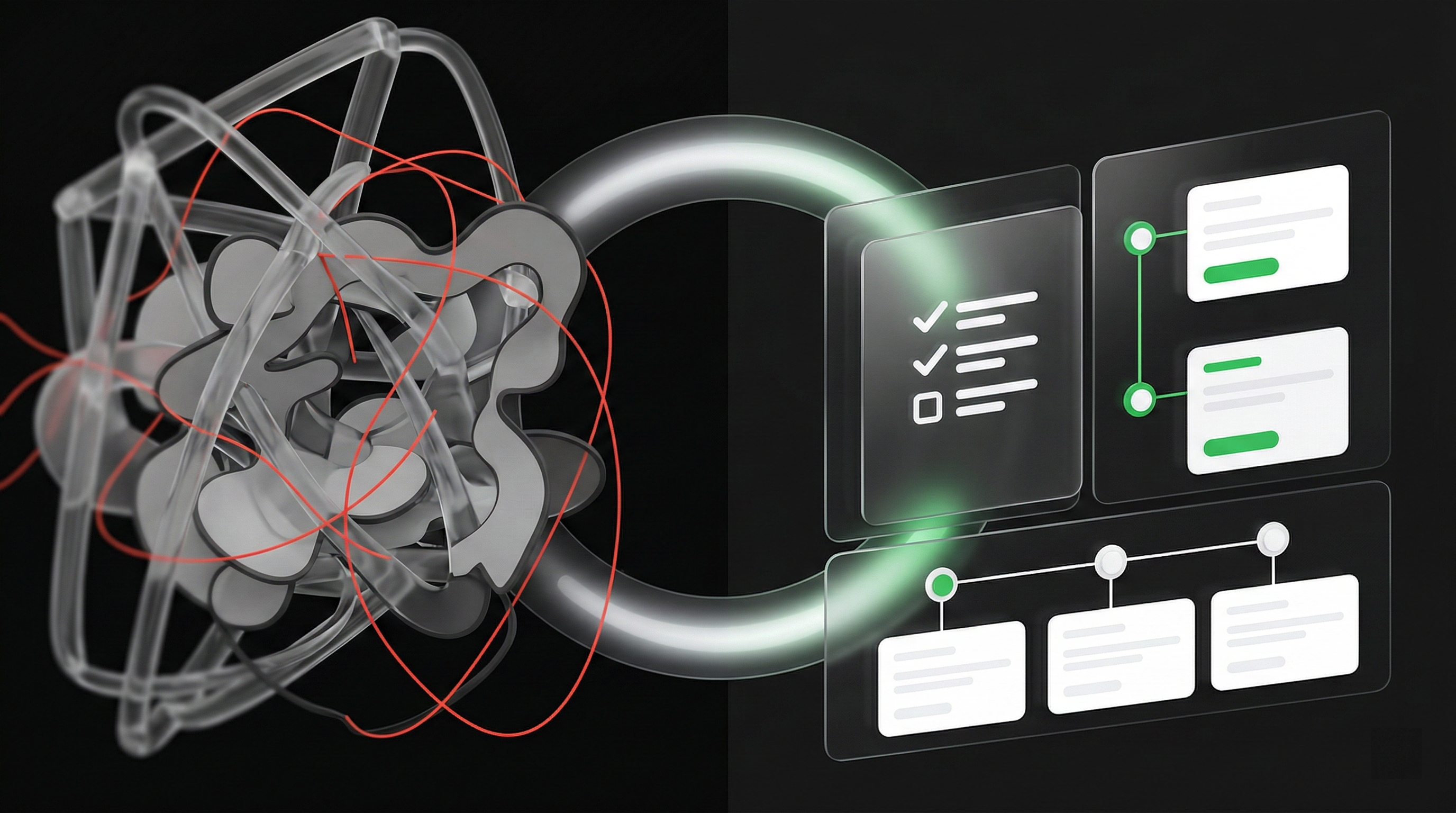
The first meeting lasts an hour. Everyone shares their thoughts, there's a lot of discussion, and the energy is good. The meeting ends. Everyone disperses. Three days later, no one remembered exactly what was talked about, who was supposed to do what is unclear, and another meeting is scheduled for that meeting.
The second meeting also lasts an hour. Similar topics are discussed. But this time, when the meeting ends, three things are clear: what was decided, who will do what, and when it will be completed. A week later, work has progressed.
What's the difference? It’s not the subject. It’s not the participants. It’s not the duration.
It’s the structure.
4 Common Traits of Indecisive Meetings
- Agenda exists, but no objective
An agenda is just a list of topics. An objective is the answer to: "What will we have decided by the end of this meeting?" Most meetings start with an agenda but move without an objective. - Confusing discussion with decision-making
Sharing ideas and making decisions are different actions. In most meetings, these two get mixed up: long discussions happen, but no one takes a step to finalize that discussion into a decision. - Action items remain in the air
"Let's handle this," "Let's research that" — these phrases are said dozens of times. But who will handle it? By when? When a meeting ends without these answers, that task is effectively non-existent. - No meeting memory
You talked about this same topic two months ago. What did you decide back then? No one quite remembers. The discussion starts from scratch.
4 Common Traits of Decisive Meetings
- Start with: "What should we have achieved by the end of this meeting?"
The most productive meetings open with this question. If the answer is clear — "we will approve the budget," "we will rank priorities" — the meeting naturally flows toward that point. - Decisions are documented during the meeting
If a decision isn't written down the moment it's made, it remains open to interpretation. Getting confirmation while taking notes during the meeting is the simplest fix. - Every action item has a name and a date
Not "let's handle it," but "Ayşe will handle it by March 15th." This small difference determines if a task exists. No name means no ownership; no date means no urgency. - The meeting leaves a record
Productive teams can reference past meetings. Being able to say, "We already talked about this; last month we decided X," is a massive time-saver.
Automating the Structure
Manually applying these 4 traits to every meeting is possible — but exhausting. One cannot listen, take notes, and manage a discussion all at once.
This is why more and more teams are starting to automate meeting structures. Brief does exactly this. When the meeting ends, you have it ready: who said what, what was decided, who will do what, and by when.
Final Word
Unproductive meetings are not a fate. They happen when well-intentioned, smart people gather without the right structure. Next time, try just one thing: before the meeting ends, ask, "What did we decide today, and who is doing what?"
Brief — Let your meetings end, and your decisions stay.